Education & Outreach

The MRC supports active stewardship of Jefferson County’s marine resources by providing science-based education and promoting community involvement. This work includes working with community partners, informing and involving local residents in hands-on projects, offering educational workshops for shoreline landowners and county residents, and building community support and appreciation for restoration, conservation and water quality improvement projects. 

See the 2025 education and outreach project summary report here.

Public Programs Offered

  • Shoreline landowner workshops and resources
  • Crabber outreach workshops and resources
  • Speaker series in partnership with the Port Townsend Marine Science Center that couples in-the-field experiences with presentations
  • "Digging for Dinner" and "Searching for Seaweed" sustainable shellfish and seaweed harvesting education events
  • Guided beach walks 
  • Public programs about shellfish aquaculture, ocean acidification, oil spill preparedness, rain gardens, king tides, and more
  • Encouraging proper disposal of pet waste and other water quality stewardship actions
  • Interpretive signs about eelgrass, rain gardens, Olympia oysters, and nearshore ecosystems

Bridget Trosin with WA Sea Grant leading a workshop on king tides

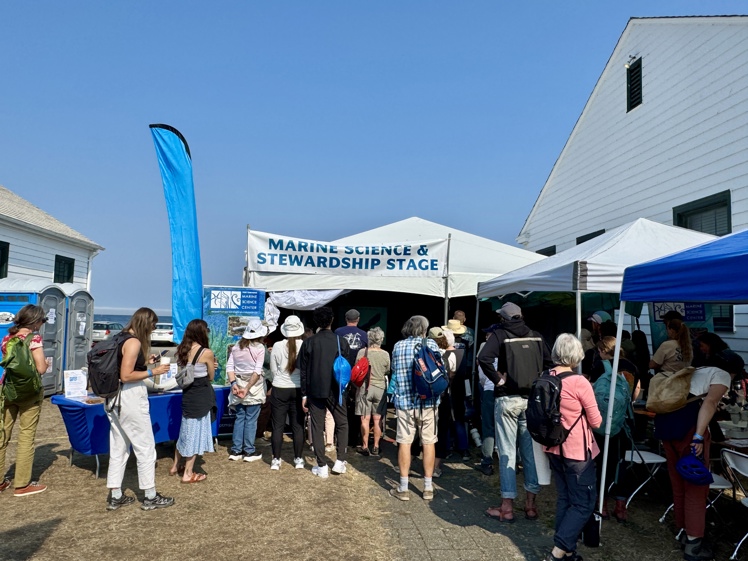
Marine Science and Stewardship Stage at the Wooden Boat Festival

    The Marine Science and Stewardship Stage has been held annually at the Port Townsend, WA Wooden Boat Festival since 2024. The Jefferson MRC wanted to bring an environmental education component to the festival through lectures and hands-on-activities, and thus the Marine Science and Stewardship Stage was born.

    The Wooden Boat Festival is a popular 3-day event celebrating the craft and beauty of wooden boats. In partnership with Northwest Maritime Center and Port Townsend Marine Science Center, the Jefferson MRC features 15+ science-based presentations, ranging from seabirds and porpoises, to sea level rise and tsunamis, to derelict vessels, kelp, and much more! Every morning starts with a live plankton collection demonstration, and throughout the day visitors get hands-on plankton viewing at 6 microscope stations. A one-page handout with photos and more information from 2025 can be seen here: 

2025 Collaborative Networking Jeff MRC One Pager
    In 2025, a promotional video featuring Jefferson MRC projects was created to show in between speakers. The video can be seen here:  https://vimeo.com/1133576790/58a4b150bf?share=copy&fl=sv&fe=ci

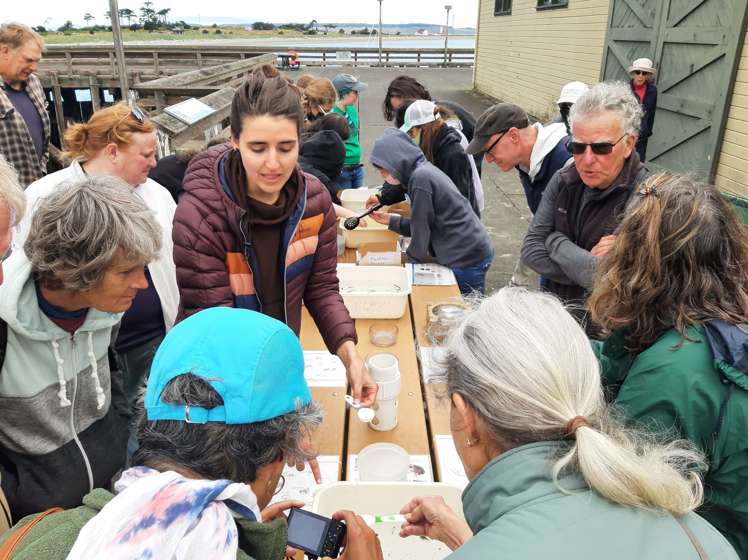
Emily Buckner with Puget Sound Restoration Fund leading a live larval crab monitoring demonstration

MRC-PTMSC SPEAKER AND EVENT SERIES

In 2021-2022, the MRC partnered with the Port Townsend Marine Science Center to launch a new speaker series that couples presentations with in-the-field experiences focused on local marine resources and issues. You can watch recordings of these presentations here:

  • "Microplastics as Marine Debris" by Andrew Mason (NOAA Marine Debris Program); coupled with a beach cleanup event
  • “King Tides and Sea Level Rise” by Bridget Trosin (WA Sea Grant) and Dave Wilkinson, a Marine Weather Instructor; coupled with a MyCoast app demonstration for documenting king tides (a social distancing-friendly event)
  • "Dungeness Crab in the Salish Sea" by Emily Buckner (PNW Crab Research Group Program Coordinator, Puget Sound Restoration Fund), Dr. Katelyn Bosely (WA Department of Fish and Wildlife) and Dr. Elizabeth Tobin (Jamestown S'Klallam Tribe Shellfish Program); coupled with a live larval crab monitoring demonstration

Interpretive Signs

The Jefferson MRC often installs interpretive signs as part of our projects. These informative signs draw attention and, we hope, increase the public’s understanding of what they see at that site.

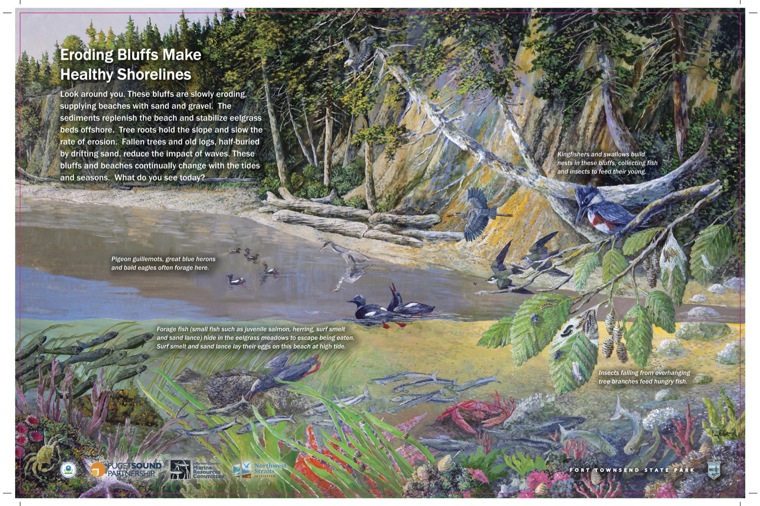
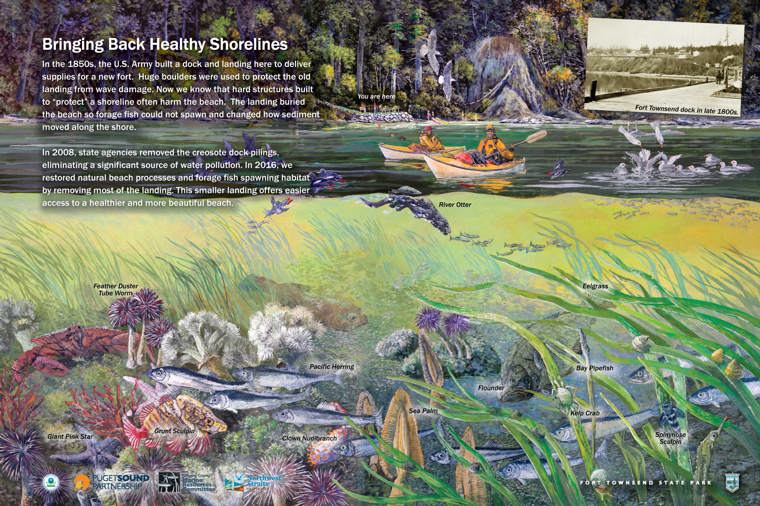
  • The MRC helped develop two new interpretive signs for the Fort Townsend State Park nearshore restoration project in 2016, with artwork by Larry Eifert (see first two images below).
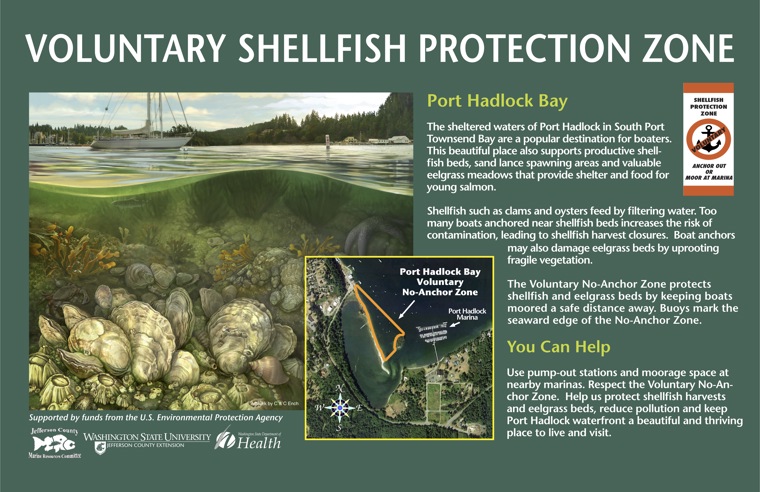
  • Voluntary no-anchor zone interpretive signs are posted along the PT waterfront and other no-anchor zone sites.
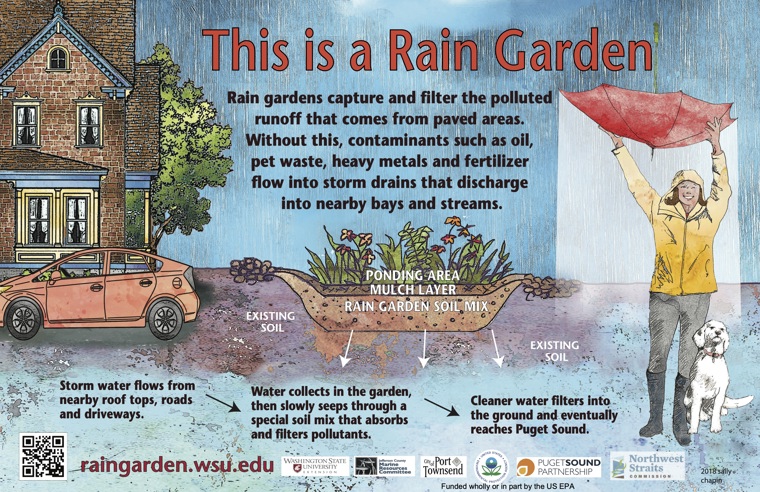
  • Rain garden interpretive signs are mounted at various MRC co-sponsored rain gardens, to explain how rain gardens help to collect and treat stormwater.

Additional Resources

Education & Outreach